
Nigeria’s victory in the nearly nine-year arbitration battle with Sunrise Power and Transmission Company Limited over the more than four-decade-old Mambilla Hydro-Power Project in Taraba State deserves to be acknowledged as a significant legal victory that has removed a major obstacle to one of the country’s most important unfinished power projects.
The Mambilla Hydroelectric Power Project has been one of the most enduring symbols of Nigeria’s inability to translate ambitious infrastructure plans into functioning economic assets. Conceived in 1982, the project has passed through governments, ministers, contracts, reviews, disputes and financing arrangements without becoming a single megawatt of electricity on the national grid.
Its extraordinary history shows that by 2015, Mambilla was already an old promise, having survived the administrations of Shehu Shagari, Ibrahim Babangida, Sani Abacha, Abdulsalami Abubakar, Olusegun Obasanjo, Umaru Musa Yar’Adua, Goodluck Jonathan and the early years of Muhammadu Buhari, without becoming the transformational power project it was intended to be.
It is against this background that the contribution of Babatunde Raji Fashola, SAN, Minister of Power, Works and Housing (2015-2019), deserves particular attention. The resuscitation of that project in 2016, when it had been in gestation for about 35 years, remains one of his notable contributions to the Power Sector. Though he neither originated Mambilla nor completed it, Fashola helped move it from the drawing board and the realm of an inherited aspiration, towards a project with a clearer procurement, financing and implementation framework.
That distinction matters because when, in 2016, under the administration of Muhammadu Buhari, he publicly announced that government was finalizing the procurement process for the project and expressed the expectation that construction would commence, Fashola became one principal government official associated with pushing that project through the bureaucratic and financial processes required to move it forward. At the time, the proposed plant was being presented as capable of adding about 3,000MW to Nigeria’s electricity supply.
Then in August 2017, he took it to the Federal Executive Council (FEC) which approved the construction of the Hydroelectric power plant at an estimated cost of $5.792 billion. Fashola announced that the project involved four dams and that construction was expected to take 72 months, with Nigeria providing 15 per cent counterpart funding under the proposed arrangement with China.
Fashola, who subsequently continued to identify Mambilla as one of the major projects within the administration’s power programme, while assessing his ministry’s performance in 2018, listed the 3,050MW Mambilla project alongside other major generation projects that the government was pursuing.
The significance of his contribution the project lies in the fact that although he did not deliver electricity from Mambilla, he helped give renewed institutional and governmental momentum to a project that had spent decades trapped in the cycle of conception, contract, cancellation and re-conception. This is the part of the Mambilla story that should not be lost in the current celebration of Nigeria’s arbitration victory.
There is also a lesson in Fashola’s involvement. Whatever one’s assessment of the broader power policies of the Buhari administration, Mambilla demonstrates the value of having ministers who identify strategic projects, pursue the administrative processes required to advance them and keep them within the national development conversation. Fashola’s role should therefore be placed in its proper historical perspective. He inherited a project that had already been delayed for decades. He did not solve all its problems, and the project was not completed during his tenure. But his tenure helped bring Mambilla back from the margins of government planning and into the centre of the country’s major power infrastructure agenda.
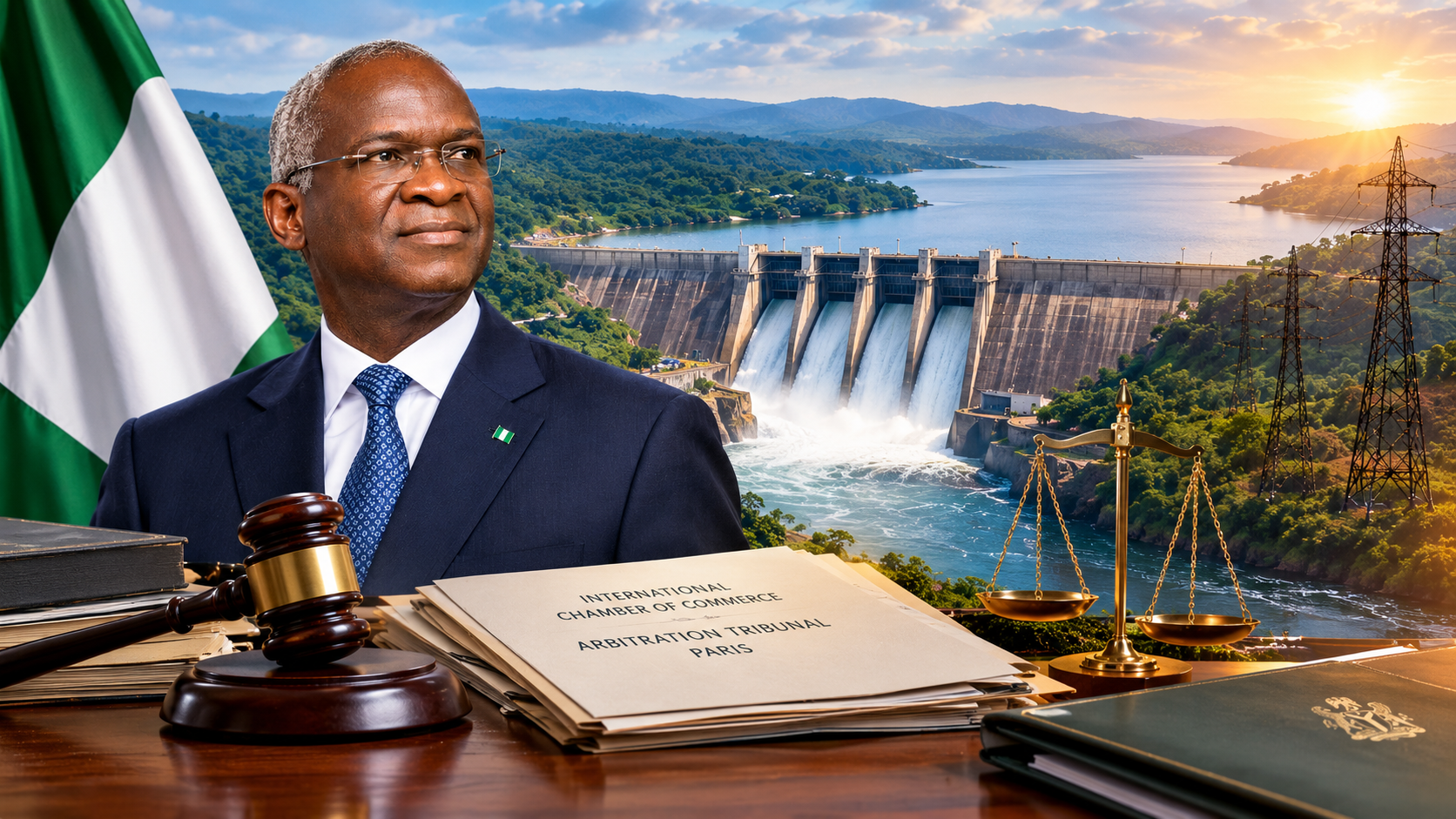
Having said that, the importance of the legal victory awarded Nigeria by the International Chamber of Commerce tribunal in Paris must be acknowledged. By rejecting the claims brought by Sunrise Power, Nigeria was saved from potential liabilities running into about $3.38 billion. The obviously exited President Bola Tinubu described the ruling as removing the “single biggest legal hurdle” that had paralyzed the Mambilla project.
The functional phrase in the president’s reaction to the legal victory is “removing the single biggest legal hurdle that had paralyzed the Mambilla project”. By implication, the president is assuring Nigerians that, all other situations being equal, the victory will translate into the physical pursuit and subsequent completion of the project this time around. Mambilla has already consumed too much time in the language of possibility to suffer any more unnecessary delays.
Interestingly, the project has also changed considerably along the way. What was originally conceived as a 3,050MW project has subsequently been reviewed and rescoped to roughly 1,500MW in an effort, according to the government, to make it financially viable and bankable. That adjustment, as necessary as it may have been, illustrates that large infrastructure projects, such as the Mambilla Hydro Electric Project, require commercially credible financing, clear contractual arrangements, competent project management, institutional continuity and strict accountability, and not political declarations. That is the central lesson of Mambilla.
The arbitration ruling has created an opportunity to start afresh. Nigeria must now establish a transparent implementation timetable for the rescoped project. It must settle the financing architecture, clarify the contractual structure, ensure that the transmission infrastructure required to evacuate the electricity is developed alongside generation capacity, and establish clear responsibility for project delivery.
Above all, Mambilla must be insulated from the institutional discontinuity that has repeatedly frustrated major Nigerian infrastructure projects. The country cannot afford another Mambilla cycle in which one administration announces a project, another reviews it, a third renegotiates it, a fourth changes its scope and a fifth is left explaining why it is still not completed.
Now, however, history must give way to delivery. Nigeria’s electricity crisis cannot be solved by megawatts on paper. A 1,500MW Mambilla project that exists only in feasibility studies, government statements and arbitration documents is not electricity. Nigerians need electricity flowing into homes, businesses, factories, hospitals and schools. They need the economic opportunities that reliable power can create. They need to know that a project conceived in 1982 will not still be described as “ongoing” in 2032.
The ICC victory has removed one formidable legal obstacle. It should also remove the excuse for further paralysis. The government must now tell Nigerians, with specificity what the financing plan is, what is the final project scope, who is responsible for delivery, what the construction timetable is, what are the milestones, and perhaps, most importantly, when will the first electricity from Mambilla reach the national grid? After more than four decades of conception and two decades of repeated promises, these are questions Nigeria owes its citizens. Mambilla has survived governments, contracts and arbitration. It should now survive the politics of delay. The legal battle may have been won in Paris. The real battle begins in Taraba. Nigeria must finally turn Mambilla from a two-decade promise into electricity.
And, perhaps finally, should anyone still ask why Fashola deserves a pride of place in the history of the Mambilla Hydro-Electric Project, he not only took the project, which predated his tenure by more than three decades, off the drawing board, he advanced it through procurement and FEC approval.
And the fact that he was among the former ministers specifically acknowledged by President Tinubu for participating as a witness in Nigeria’s defence before the arbitration tribunal also underscores his continuing relevance to the project’s complicated history.