
Abuja’s Vanishing Masterplan: Can Nigeria Still Save the Capital’s Original Vision?

- Knowledge is power
- The Future Of Possible
- Hibs and Ross County fans on final
- Tip of the day: That man again
- Hibs and Ross County fans on final
- Spieth in danger of missing cut
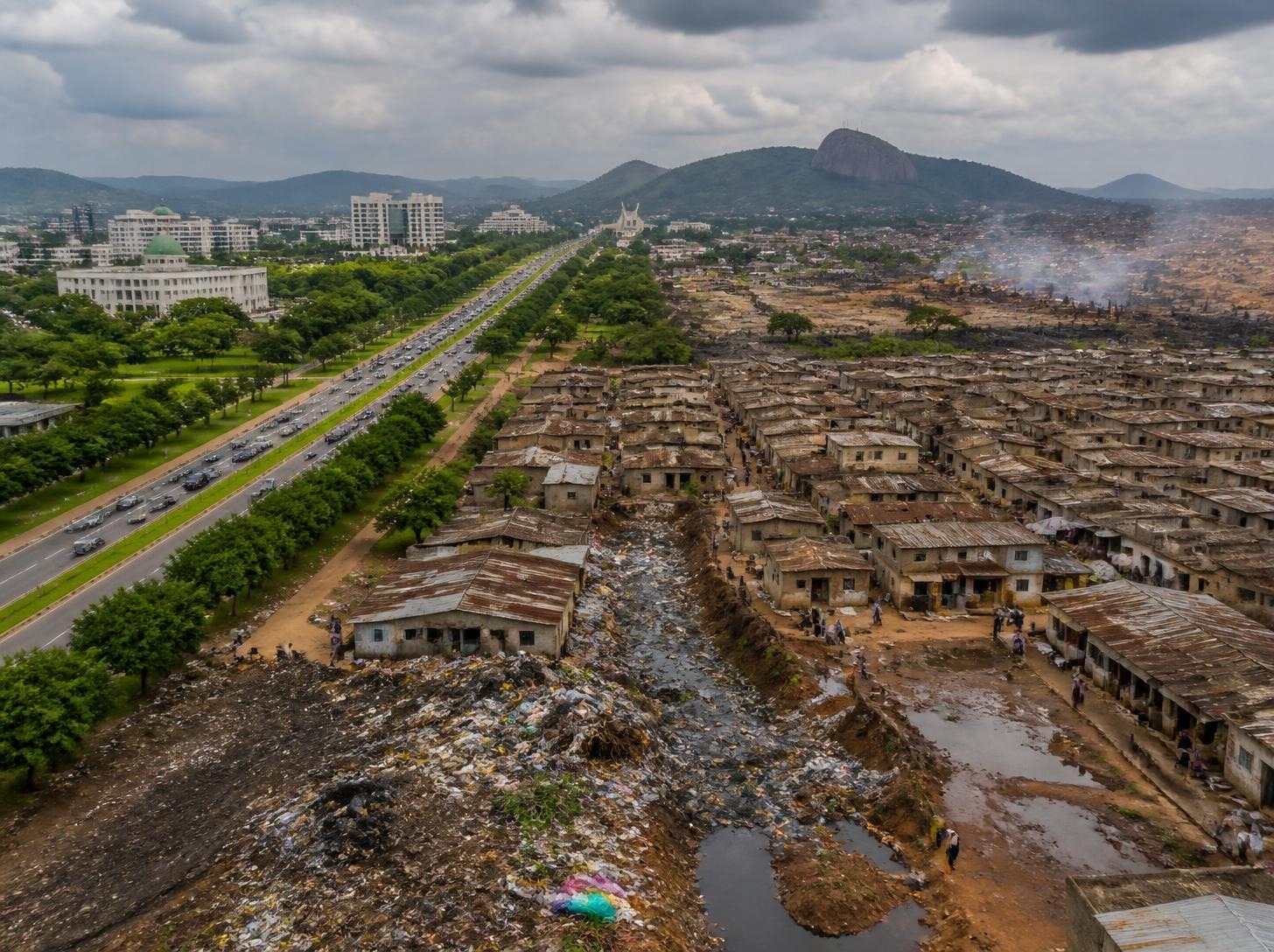
When Nigeria conceived Abuja as its new Federal Capital Territory in the 1970s, the ambition went far beyond relocating government offices from Lagos. The city was envisioned as a carefully planned national capital that would symbolize unity, order and modern urban development. Wide roads, expansive green belts, regulated land use and efficient public infrastructure formed the foundation of a masterplan intended to avoid the overcrowding, chaotic expansion and environmental decline that had overwhelmed Lagos.
Today, however, that carefully crafted vision is steadily giving way to the realities of rapid urbanization, weak planning enforcement and mounting environmental degradation. More than three decades after Abuja officially became Nigeria’s capital in 1991, many of the principles that guided its development are under severe strain, raising concerns about whether the city can still fulfill the aspirations of its founders.
From Planned Capital to Rapidly Expanding Metropolis.
The decision to establish Abuja was taken by the military administration of the late General Murtala Mohammed in the mid-1970s. Located near the geographical centre of the country, the city was designed to serve all regions equally while offering room for controlled, long-term expansion.
At the time of its planning, Abuja was expected to accommodate roughly one million residents in its initial phase. Yet population growth has far exceeded those projections. From an estimated population of about 350,000 in 1979, Abuja has grown into a metropolis of well over three million permanent residents, while daily human movement into and out of the city pushes its daytime population to approximately seven million.
The city’s annual urban growth rate, estimated at around eight per cent, has consistently outpaced investments in roads, housing, drainage, sanitation and environmental management. As a result, infrastructure originally designed for a much smaller population is struggling to cope with present realities.
You should never complain, complaining is a weak emotion, you got life, we breathing, we blessed. Surround yourself with angels. They never said winning was easy. Some people can’t handle success, I can. Look at the sunset, life is amazing, life is beautiful, life is what you make it. Life is what you make it, so let’s make it. You should never complain, complaining is a weak emotion, you got life, we breathing, we blessed.
Urban Growth Beyond the Masterplan
Population increase alone is not responsible for Abuja’s mounting challenges. The city’s expansion has increasingly occurred outside the framework of its original masterplan.
Following the relocation of indigenous communities during the early stages of development, many later returned and, over time, portions of land originally reserved as green areas or public spaces found their way into private hands. Informal land transactions, combined with weak regulatory enforcement, encouraged the emergence of unplanned settlements across different parts of the Federal Capital Territory. Communities such as Dutse Alhaji, Mpape, Lugbe, Bwari and numerous others illustrate this pattern. Houses often spring up without proper road networks, drainage systems or other essential infrastructure.
Former Minister of Works and Housing, Babatunde Fashola SAN, once captured the irony of Nigeria’s housing development by observing that many people complete building projects before considering how roads will reach them. That observation accurately reflects the reality in many of Abuja’s fast-growing satellite communities, where development frequently precedes planning.
Environmental Costs of Unplanned Expansion
The consequences of uncontrolled growth extend well beyond poor physical planning. Public health, environmental sustainability and the overall quality of urban life have all been affected. High-density settlements lacking adequate sanitation expose residents to various health risks, particularly children, while poor housing conditions contribute to unhealthy living environments. Waste generated daily by rapidly expanding communities frequently overwhelms available disposal systems.
Environmental pollution has become an increasing concern. Vehicular emissions continue to rise as traffic congestion worsens across the city, while illegal refuse dumps add another layer of environmental hazards. Available studies estimate that environmental pollution contributes to approximately 100,000 deaths annually across Nigeria, underscoring the broader implications of poor environmental management.
Abuja’s transportation network also reflects the strain of rapid growth. Roads originally designed for moderate traffic volumes now experience persistent congestion during peak periods, increasing travel times, fuel consumption and carbon emissions.
A Waste Management System Under Pressure
Perhaps nowhere are Abuja’s environmental management challenges more visible than in its waste disposal practices. In many informal settlements, private refuse collectors—popularly known as “Me Bola” operators—collect household waste for a fee. Without designated disposal facilities, however, much of this refuse ultimately ends up inside drainage channels, open gutters or nearby vacant spaces.
During the Rainy Season, some residents resort to dumping refuse directly into floodwaters, assuming the flowing water will carry it away. Instead, the waste blocks drainage systems, increasing the frequency and severity of urban flooding.
Even within formally planned districts, waste management remains inadequate. Limited numbers of compactor trucks mainly serve high-profile neighbourhoods such as Asokoro and parts of the Central Business District. Overflowing waste bins are common along many roads, while disposal practices outside the city centre often involve open dumping around the outskirts of Abuja.
The absence of sufficient sanitary landfills, recycling facilities and modern waste treatment infrastructure continues to undermine efforts to maintain environmental standards expected of a national capital.
[/padding]Disappearing Green Belts
Among the most worrying developments is the gradual disappearance of Abuja’s green infrastructure. The city’s masterplan deliberately incorporated extensive parks, forests and green belts to improve air quality, regulate temperature, preserve biodiversity and enhance the city’s visual appeal. Today, many of those protected spaces are steadily shrinking.
Residential and commercial developments increasingly encroach upon land originally designated for conservation. At the same time, charcoal production has emerged as a thriving commercial activity, leading to extensive tree felling across open spaces and areas surrounding the capital.
Large portions of what were intended to remain permanent green corridors have been stripped of vegetation, leaving exposed soil and degraded landscapes. If this trend continues unchecked, Abuja risks losing natural environmental buffers that play vital roles in climate regulation, flood control and ecological balance.
Why the Masterplan Is Losing Ground
Two major institutional weaknesses largely explain Abuja’s growing environmental and planning problems. The first is inadequate enforcement of existing regulations. Although the city’s masterplan clearly defines land use, authorities have often failed to prevent illegal developments or protect areas reserved for public infrastructure and environmental conservation.
Similarly, waste management regulations remain insufficiently developed or poorly enforced. The city lacks adequate designated disposal sites, modern incineration facilities and comprehensive recycling systems, leaving residents and private operators to improvise disposal methods.
The second challenge lies in overlapping institutional responsibilities. The Abuja Environmental Protection Board (AEPB) is responsible for sanitation, pollution control and environmental enforcement. The Federal Capital Development Authority (FCDA) oversees physical planning and land administration, while the Federal Ministry of Environment formulates national environmental policies.
In practice, these overlapping mandates can create uncertainty regarding responsibility for issues such as illegal developments that obstruct drainage channels or encroach upon environmentally sensitive areas. Without stronger coordination among the agencies, enforcement gaps and administrative delays are likely to persist.
A Roadmap for Recovery
Restoring Abuja’s original vision will require determined policy action supported by effective implementation. Priority should be given to establishing a modern waste management system built around public-private partnerships, regular door-to-door collection services, recycling facilities and stronger institutional capacity for the AEPB. Introducing a “pay-as-you-throw” model could also encourage responsible waste disposal while generating resources for improved services. Drainage infrastructure requires substantial upgrading and regular maintenance to reduce flooding, while greater investment in wetlands and other forms of green infrastructure would improve stormwater management and strengthen climate resilience.
Equally important is strict enforcement of the Abuja Masterplan to curb illegal developments and protect remaining green belts. Rather than allowing endless outward expansion, authorities should encourage carefully regulated vertical development that accommodates population growth without consuming additional open spaces.
Public education also remains essential. Residents must become active partners in protecting the city’s environment through responsible waste disposal, tree preservation and compliance with planning regulations.
Addressing the Root Cause
Abuja’s challenges cannot be separated from the broader pattern of rural-to-urban migration occurring across Nigeria. People continue to leave rural communities because of limited economic opportunities and poor infrastructure. Many villages still lack reliable roads, electricity, healthcare, quality schools and potable water. Ironically, these same rural communities supply much of the agricultural produce and raw materials that sustain urban economies.
As long as development remains concentrated in major cities, migration pressures on Abuja and other urban centres will continue to intensify.
Reducing these pressures requires deliberate investment in rural infrastructure, agriculture, education and employment opportunities. Providing basic services in rural communities would enable more young people to build productive lives where they live instead of relocating to already overstretched cities.
Preserving the Capital’s Future
Abuja remains one of Africa’s most ambitious urban planning projects, but its continued success depends on whether Nigeria can recommit to the principles that inspired its creation. The city’s growing population is not, in itself, a problem. The real challenge lies in ensuring that growth is properly planned, environmentally sustainable and supported by strong institutions capable of enforcing development standards.
Saving Abuja’s masterplan is no longer simply about preserving architectural ideals. It is about protecting public health, safeguarding the environment, improving the quality of urban life and ensuring that Nigeria’s capital remains a city worthy of the vision that gave it birth.



Hi, this is a comment.
To get started with moderating, editing, and deleting comments, please visit the Comments screen in the dashboard.