2027: Opposition Unity Must Be Built on Sacrifice, Fairness and a Credible Candidate

The opposition political parties and stakeholders will gather in Abuja on Monday, August 31, 2026, under the G-100 platform, in what may yet prove to be the most consequential political meetings on the nation’s road to the 2027 general elections. The real significance of that eminent gathering will lie, not in the number of attendees, but in how ready and willing the several political parties, with powerful leaders, competing ambitions and different interests, are to voluntarily surrender the opportunity to produce their own presidential candidate in favour of one person. This has, hitherto, been the most difficult question facing Nigeria’s opposition political parties.
Interestingly, the G-100 has already begun the good work by bringing representatives of major opposition parties into consultations and securing discussions with national chairmen, presidential candidates and their running mates. It has also established contact with the Minority Caucus of the House of Representatives, which has agreed to participate in the technical process. These steps have certainly brightened the expectation that the August 31 summit will provide a broader platform for determining how the proposed cooperation can work.
But as encouraging as this is, unless Nigeria’s opposition parties imbibe the lesson of the 2023 general elections, where, because of their fragmentation, Bola Tinubu emerged victorious with less than a majority of the votes cast, they could still lose the election, even with considerable popular support from the top-notch political bases, national appeals and organizational machineries of Atiku Abubakar, Peter Obi and Rabiu Kwankwaso.
There is another lesson which the opposition must not ignore. If they mean to achieve true unity. they must build it around a process that all participants regard as fair. That should be the central task of the August 31 summit. And in order to achieve this fairness-based unity, some relevant principles must be met. First, the parties must agree on the objective, which, aside defeating the incumbent, must include, for instance, to construct a credible alternative government capable of addressing Nigeria’s economic, security and institutional problems. This is the only way to achieve a broad-based and sustainable unity.
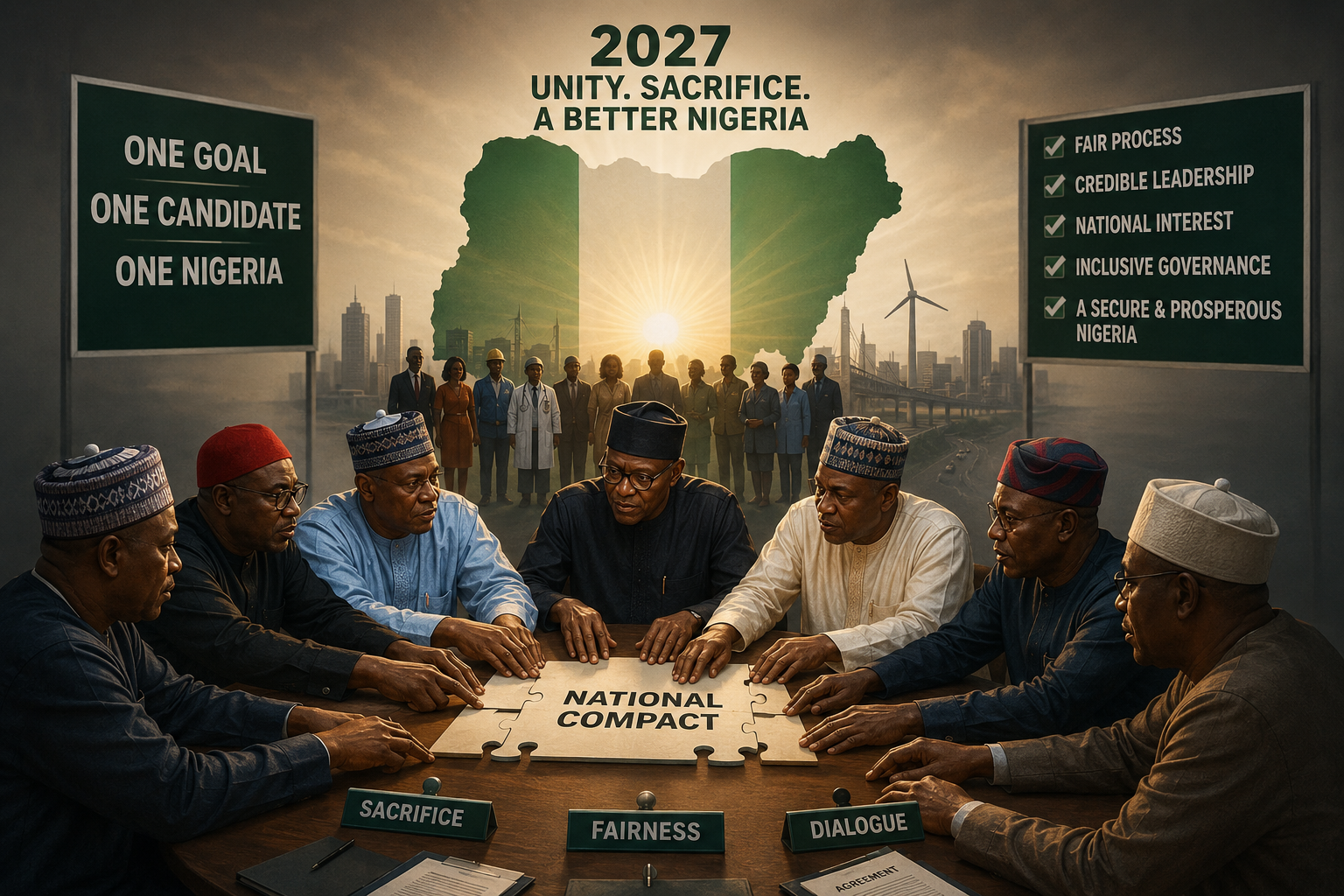
The truth is that an alliance held together merely by opposition to President Tinubu could collapse immediately after an electoral victory because its members may have little agreement beyond the desire to remove the incumbent. Nigeria has experienced enough political coalitions formed principally for electoral purposes. What is required now is that participating parties should agree first on a short, practical national compact covering the economy, security, constitutional reform, federalism, corruption, electoral reform, public-sector accountability and the rule of law. The presidential candidate should then be required to sign that compact. That would shift the debate from “Who is the most powerful politician?” to “Who can best deliver the agreed national programme?”
Secondly, no aspirant should be allowed to choose the method of selection. The parties should establish an independent Presidential Selection Council whose membership reflects Nigeria’s geographical, generational and professional diversity and comprises of respected Nigerians who are not presidential aspirants and do not hold executive positions in any participating political party. There should be an agreed selection process based on objective criteria, including, national acceptability, demonstrated leadership capacity, integrity and public reputation, electoral strength, ability to attract votes across regional and religious boundaries, governing experience, commitment to democratic institutions, capacity to raise and manage a national campaign, acceptance among younger Nigerians, and willingness to subordinate personal ambition to the coalition’s collective decision.
While zoning may be considered as one factor, it should not become a substitute for competence or a mechanism for imposing one aspirant on the coalition. And no candidate should be disqualified merely because he comes from a particular region.
Thirdly, the candidate must be chosen before the campaign becomes too expensive to stop. Nigeria officially entered the campaign season on August 19, according to the current electoral timetable, giving political parties a limited period to convince voters before the 2027 presidential election. The opposition should, therefore, agree on a clear deadline for selecting its presidential candidate.
Fourthly, the opposition must rely on evidence of electoral strength and efficiency, not “the biggest name”, to determine who to hand its mandate. The assessment should therefore combine several variables, including, public opinion, electoral organisation, geographical spread, acceptability, competence, integrity and coalition-building capacity. The eventual candidate should be the person who scores strongest across the totality of these measures, rather than the person with the loudest political machinery.
Again, the coalition must ensure that every defeated aspirant has a meaningful stake. It is unrealistic to expect major presidential aspirants to withdraw from the race without receiving assurances about their political future. A credible coalition must therefore negotiate a political compact for the post-selection period. In other words, if one person emerges as presidential candidate, the others could become principal campaign leaders, policy advisers, members of a national governing council or heads of specific campaign and transition committees. More importantly, the coalition should agree on principles governing the composition of the eventual government if it wins; such as abroad principles of inclusion so that every major bloc knows that its sacrifice will not amount to political extinction.
Again, the presidential ticket must be negotiated as a genuine national ticket. The presidential candidate and running mate, for example, should complement each other in terms of geography, political experience, competence and electoral reach. But the running mate should not be selected merely because of ethnicity or religion. Nigeria needs to move beyond the idea that balancing identities automatically produces good government. Instead, the real question should be: Does the ticket inspire confidence among Nigerians who do not share the candidates’ regional, religious or ethnic identities? That is the standard a serious national coalition should impose on itself.
Other principles, perhaps, include agreement on how the various parties will vote in the presidential election and the creation of a dispute-resolution mechanism. Truth is that if six opposition parties endorse one candidate but retain rival presidential candidates on the ballot, the purpose of the exercise is defeated.
The coalition must, therefore determine, before selecting its candidate, which party or platform will carry the common candidate and how the other parties will formally withdraw, endorse or otherwise align behind that candidacy within the requirements of Nigerian electoral law. This legal structure matters enormously, because a political agreement that cannot survive scrutiny under the Electoral Act or INEC regulations is not legally binding. This is why lawyers, electoral experts and representatives of INEC-related compliance teams should be part of the technical process from the beginning.
As for the creation of conflict resolution mechanism, it will be invidious of the coalition to think that there would be no disputes. So, it needs a mechanism for settling disagreements before they become public wars. Such mechanism, in the form of an independent arbitration panel, should be empowered to deal with disputes involving candidate selection, party compliance, campaign resources, zoning, appointments within the coalition and interpretation of the agreement. More importantly, perhaps, every participating party and aspirant should sign a pre-commitment agreement accepting the outcome of the agreed selection process. This is because the essence of democracy is not merely having a process. It is accepting its result.
But, perhaps, the greatest sacrifice would be that the opposition leaders genuinely commit to rescuing Nigeria from what they consider bad governance. The G-100 has correctly identified sacrifice and compromise as essential to the process. The recent consultations have also demonstrated that there is at least some willingness among opposition actors to explore cooperation. But reports still indicate continuing uncertainty over the willingness of some leading presidential contenders to surrender their individual ambitions in favour of a single candidate. That is precisely why the process must be bigger than any individual.
All taken, this is, perhaps, the most difficult political sacrifice of all: the willingness of the various party leaders to lose their personal opportunity for power today so that the country may gain a better opportunity for leadership tomorrow. If they can make that sacrifice, August 31 could mark the beginning of a new chapter in Nigerian opposition politics.