

- Knowledge is power
- The Future Of Possible
- Hibs and Ross County fans on final
- Tip of the day: That man again
- Hibs and Ross County fans on final
- Spieth in danger of missing cut
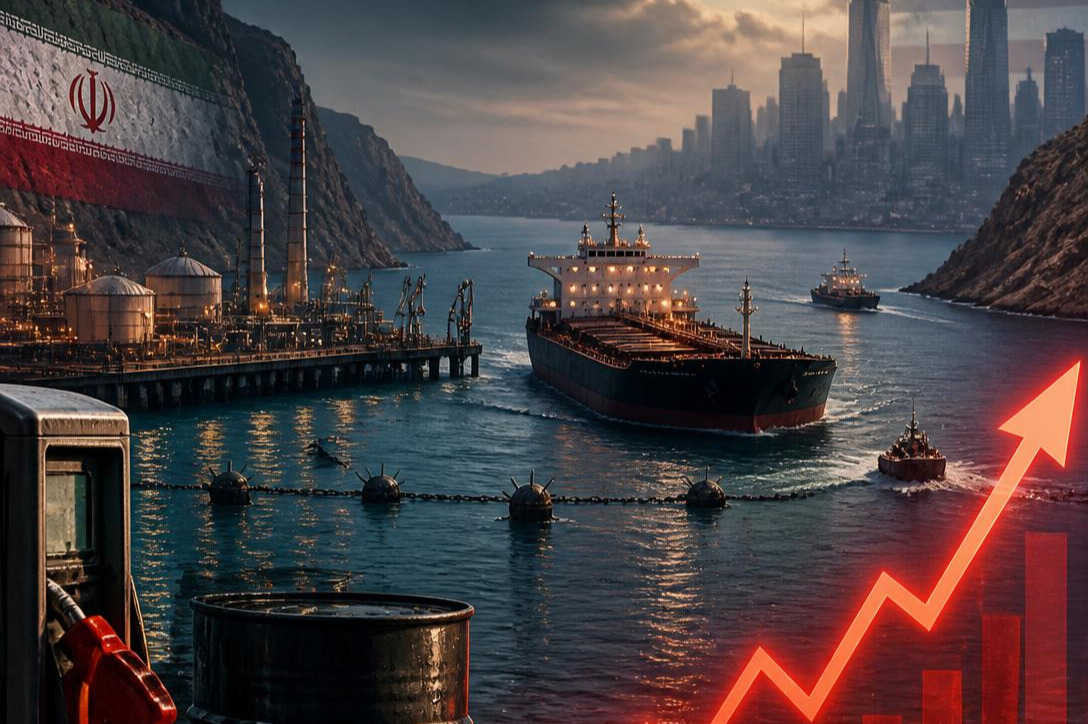
Analysts fear recent gains against rising prices could prove short-lived as Trump orders renewed blockade of Iranian ports
After months of encouraging signs that inflation in the United States was gradually easing, renewed hostilities between Washington and Tehran are raising fresh concerns that the progress could be short-lived.
The latest government data showed that US consumer inflation slowed more than expected in June, helped largely by lower energy prices following a temporary easing of tensions in the Middle East. But with President Donald Trump ordering the resumption of the blockade of Iranian ports, economists are warning that rising geopolitical risks could once again send global oil prices higher, reviving inflationary pressures across the American economy.
Energy prices have remained one of the most significant drivers of inflation over the past several years, influencing transportation costs, manufacturing, food prices and household spending. Any disruption to crude oil supplies from the Middle East—home to a substantial share of global oil production—has historically translated into higher fuel prices worldwide. That possibility has returned to the forefront following the latest escalation between the United States and Iran.
According to data recently released by the US Labour Department, the Consumer Price Index (CPI) increased by 3.5 per cent in June from a year earlier, slowing from the 4.2 per cent annual increase recorded in May. The moderation was stronger than economists had anticipated, with analysts surveyed by Dow Jones Newswires and The Wall Street Journal expecting inflation to remain around 3.8 per cent.
The decline reflected lower energy costs, which more than compensated for continued increases in housing and food prices. Overall consumer prices also fell by 0.4 per cent between May and June, marking the first month-on-month decline since 2020, while core inflation—which excludes the more volatile food and energy categories—eased to 2.6 per cent. For policymakers, the figures suggested that the Federal Reserve’s prolonged campaign against inflation was beginning to deliver measurable results.
However, the renewed geopolitical tensions have introduced a significant new source of uncertainty. Market analysts note that oil prices are particularly sensitive to developments involving Iran, one of the world’s major crude oil producers. Any prolonged disruption to shipping routes, export terminals or regional supply chains could tighten global crude supplies, driving up petroleum prices and feeding directly into consumer inflation.
Such developments would not only increase gasoline prices but also raise transportation costs across industries, ultimately pushing up the prices consumers pay for goods and services. The concern is especially significant because inflation, although moderating, remains well above the Federal Reserve’s long-term target of two per cent.
Appearing before the House Financial Services Committee on the issue, Federal Reserve Chairman Kevin Warsh reiterated the central bank’s determination to eliminate what he described as the country’s prolonged inflation surge. “My commitment to you is to follow the law and follow the data, follow our very best judgment. If we get policy right—and I can assure you we will—the inflation surge of the last five years will be a thing of the past”, Warsh told lawmakers.
His remarks underscored the delicate balancing act now facing the central bank. Should renewed Middle East tensions trigger another sustained rise in energy prices, the Federal Reserve could be forced to maintain tighter monetary policy for longer—or even consider additional interest rate increases—to prevent inflation from accelerating again. Economists say that possibility has become increasingly realistic.

Nationwide Chief Economist Kathy Bostjancic observed that while the latest inflation report offers the Federal Reserve some flexibility, the recent rebound in crude oil and gasoline prices could quickly alter the outlook. According to her, the reversal in energy markets keeps the likelihood of another interest rate increase in the coming months firmly on the table.
Oxford Economics economist Bernard Yaros also noted that June’s inflation report did not show broad-based price increases across the wider economy, suggesting that inflationary pressures outside the energy sector remain relatively contained. He added that the effects of President Trump’s tariffs and the rapid expansion of artificial intelligence investment were not yet significantly influencing consumer prices.
Even so, analysts agree that energy remains the biggest immediate risk. The White House has sought to reassure consumers. Economic adviser Kevin Hassett described the June inflation figures as the strongest in several years and dismissed the renewed tensions with Iran as only “a hiccup” in the broader downward trend in gasoline prices.
Yet financial markets remain cautious. Previous confrontations involving Iran have repeatedly triggered spikes in global oil prices, and investors fear that a prolonged confrontation could once again disrupt international energy markets.
For American households already struggling with elevated living costs, another surge in fuel prices would quickly ripple through transportation, food distribution, manufacturing and retail sectors, placing renewed pressure on family budgets. The latest inflation figures therefore present a mixed picture.
On one hand, they suggest that the United States is making meaningful progress in bringing inflation under control after years of persistent price increases. On the other, they also highlight how vulnerable that progress remains to external geopolitical shocks.
If the confrontation between Washington and Tehran intensifies, the recent decline in inflation could prove temporary, forcing policymakers to confront yet another round of difficult decisions as they seek to balance price stability with economic growth.
For now, the battle against inflation appears to have entered a new phase—one where developments in the Middle East may prove just as important as domestic economic policy in determining the path of prices in the months ahead.



Hi, this is a comment.
To get started with moderating, editing, and deleting comments, please visit the Comments screen in the dashboard.